

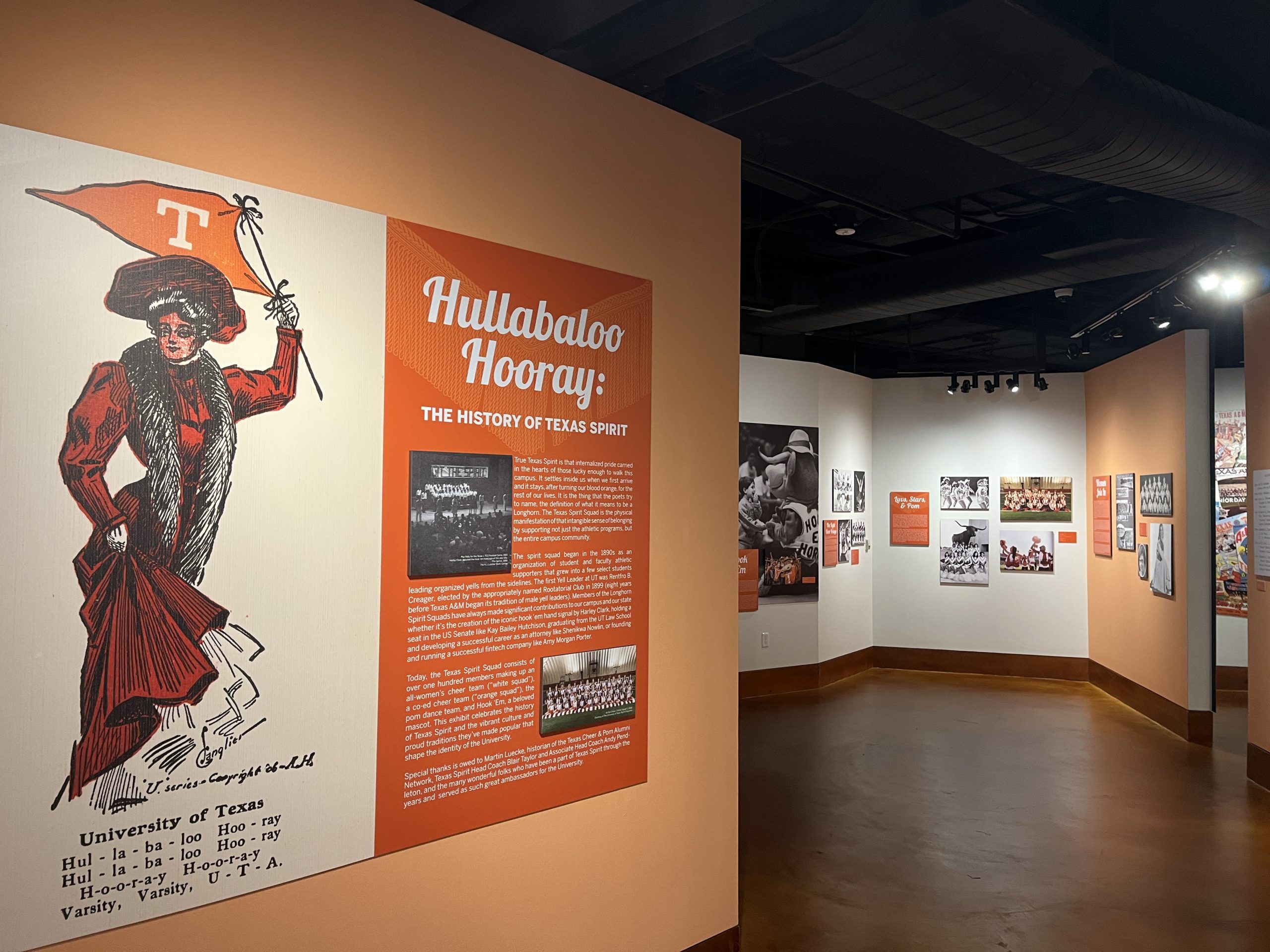
Just in time for a new football season defined by great expectations, we have opened a new exhibit at The Stark Center called “Hullabaloo Hooray: The History of Texas Spirit.” Named for the first official “Varsity” cheer, the exhibit tells the history of yells, cheers, performances, routines, and the students who lead them. Cheering and the Texas Spirit program have always played tremendous roles in shaping and defining what it means to be part of the University of Texas, despite humble beginnings as student run committees. It did not take long for me to see the enormous levels of dedication and devotion that cheer teams and spirit squads have given to this University. In researching, writing, and curating the exhibit, I felt truly inspired by their historic contributions despite such meager resources. My great privilege, however, was meeting former members of the University’s cheer teams and hearing their personal stories. This blog is a cheer for the cheerleaders, the great people who helped, supported, and cheered me on as I raced to get the new exhibit open before the kickoff of the Texas v. Ohio State football game.
MARTIN LUECKE
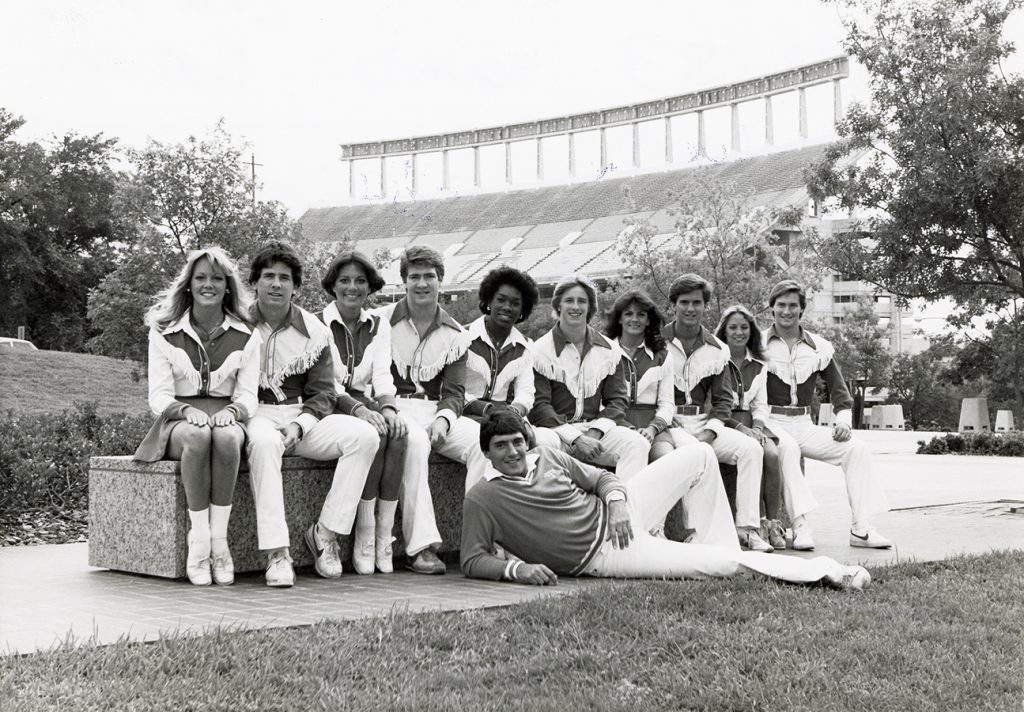
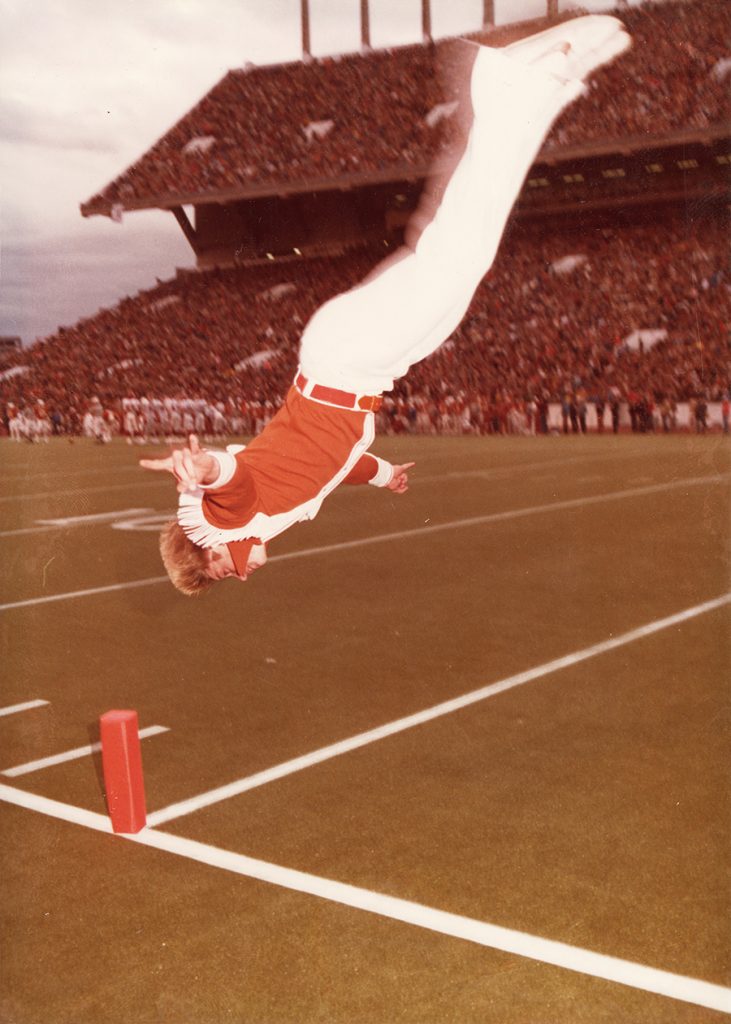
Martin was a member of the varsity cheer squad from 1983-1985. He was an All-American in 1983, voted head cheerleader in 1984, and now serves as the resident historian of the Texas Exes Cheer & Pom Alumni Network. He’s as sharp and hardworking a historian as he was a cheerleader. Martin immediately answered my calls and helped point me towards large moments in the history of cheer, first-hand sources, personal interviews and histories, connections to other former cheerleaders, and he even loaned me various items from his own collection for display in this exhibit. Martin’s experience is presented in a section about the Longhorns 2nd place finish in the 1983 NCA National Championships. A squad with only ten members, the Longhorns’ performance was a remarkable feat of athleticism. Half the team were named All-Americans. If you visit the exhibit, be sure to dive into the details of every chapter––it is full of amazing stories like this one. Martin, thank you so much for your enthusiasm and your prodigious knowledge, but especially for your patience!
MARY GAYLE BRINDLEY (WEBER)
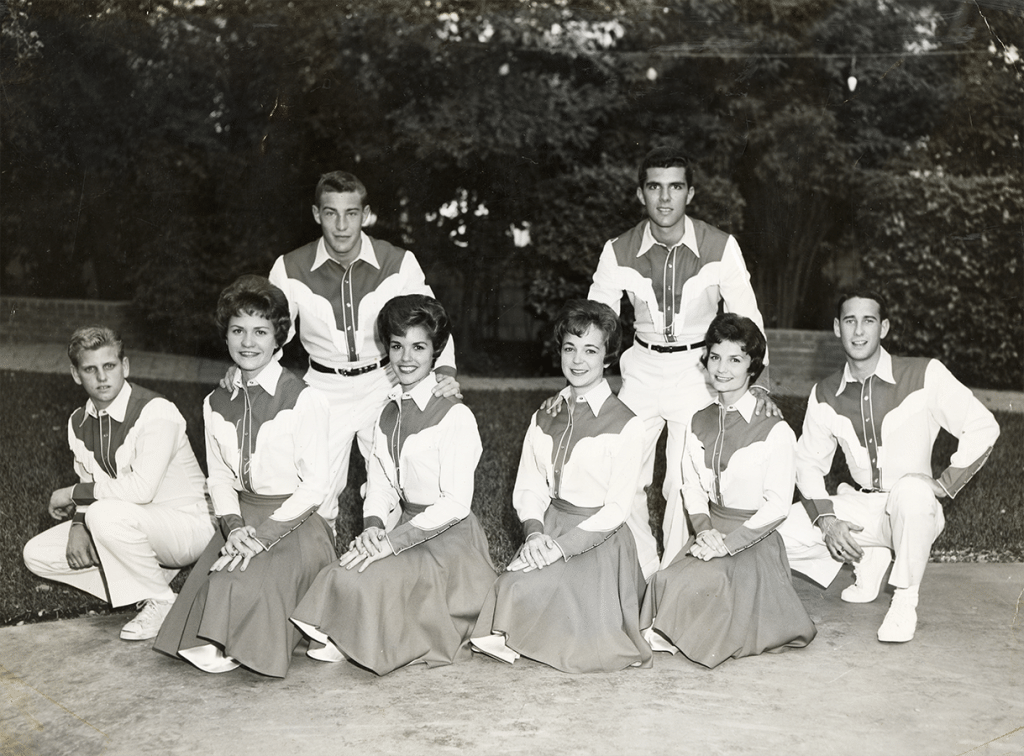
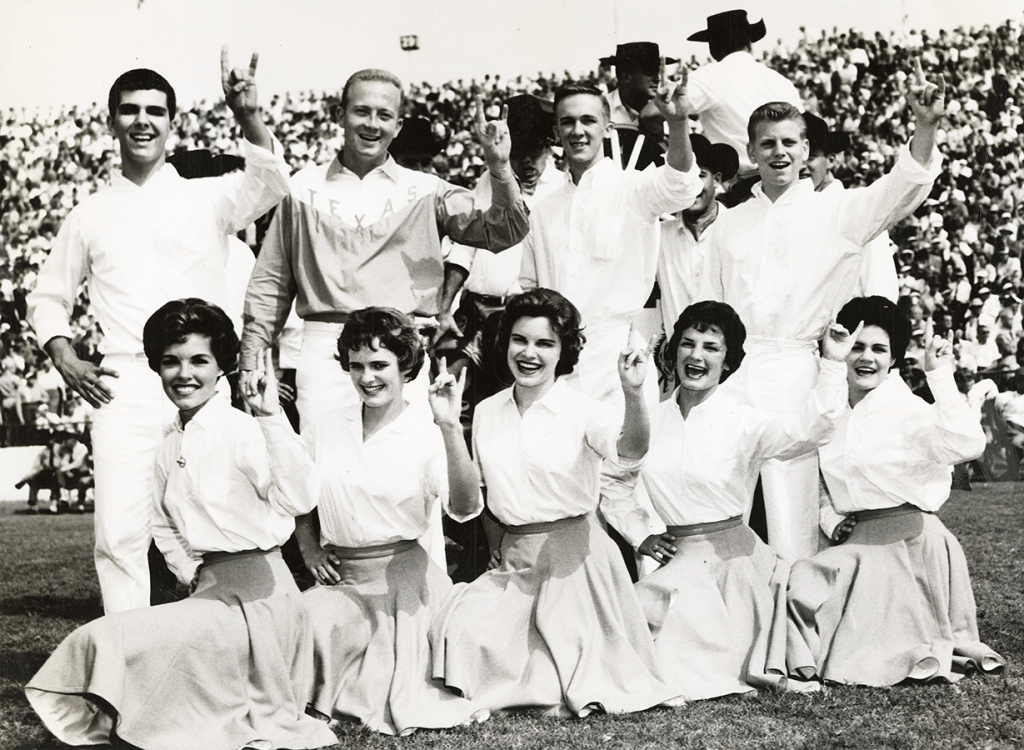
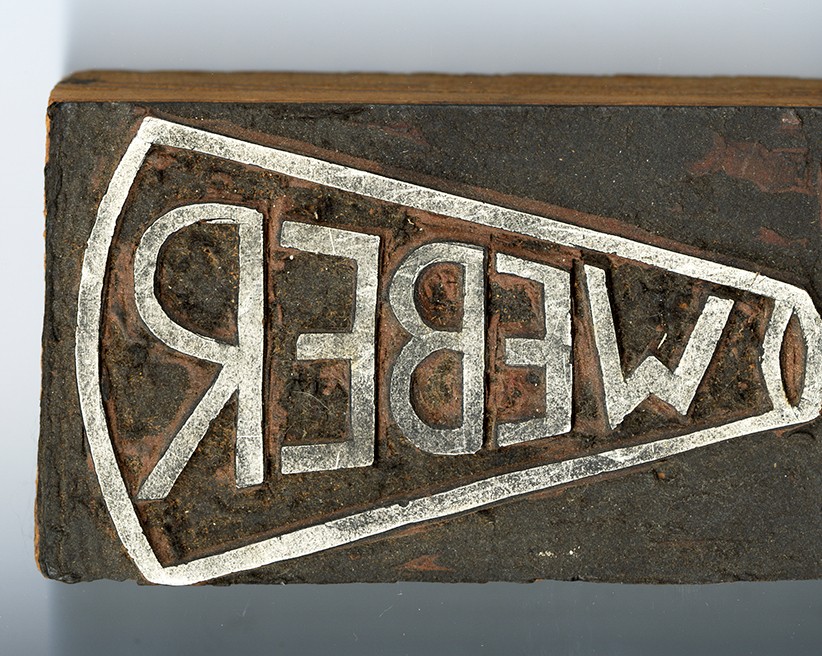
“Well, it surely was fun doing it,” was something that Mary Gayle Brindley, now of Cuero, Texas, said to me about her time on the cheer squad in the early 1960s. I wrote her words down immediately and said that I was going to quote her on that. She laughed. Most notably for this exhibit, Mary was a member of the 1961 squad—the very first to wear the iconic Texas fringe. I already knew the exhibit needed more than just the loan of Mary’s 1961 fringe uniform and the vintage white megaphone that decorates her home. Her bright, sparkling personality and passionate Texas Spirit should also be on display. After many phone calls, we coordinated the delivery of Mary’s uniform, megaphone, and personal photos to the Stark Center. How’d we manage to do it? Well, I offered to drive to Cuero from my home in San Marcos, but Mary still regularly drives herself to Austin to attend Texas Longhorn football games. Two of Mary’s children and one grandchild have graduated from the University, along with many other family members, and two more of her grandsons have just begun their freshman year at Texas. So, she doesn’t dare miss any of the excitement if she can help it. Mary, thank you so much for your glittering kindness, but more importantly, for your trust!
KARLA SHELBY (KELSON)
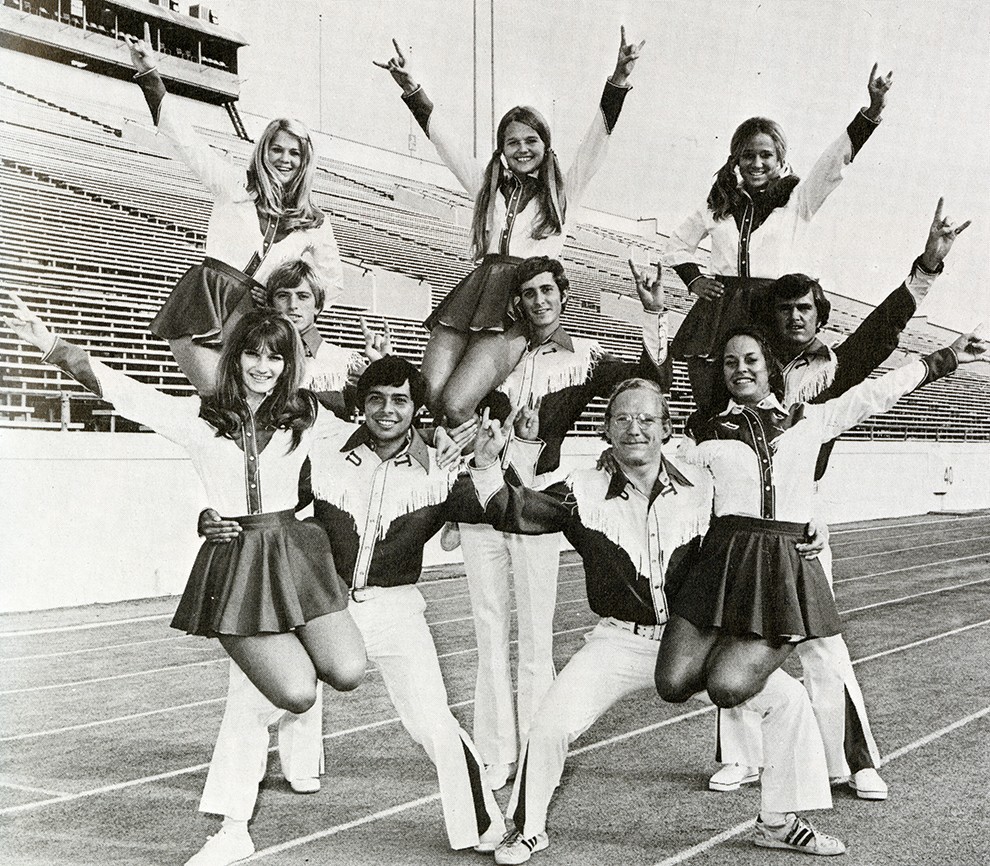
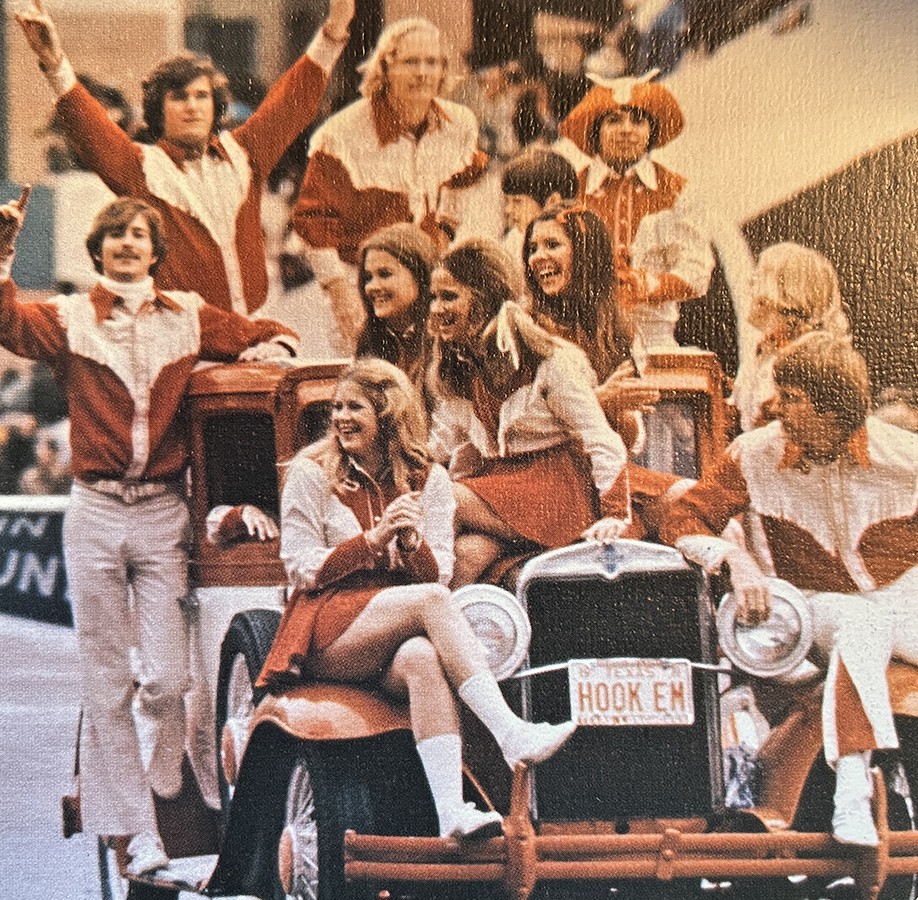
Karla Shelby reached out to me via email expressing her desire to help in any way with the upcoming exhibit. Karla was a Texas cheerleader from 1969-1972. Around this same time, her older brother was playing football for the University of Arkansas and because of the old rivalry between the two SWC schools at that time, the sibling pair was a regular story when the Longhorns and Razorbacks clashed on the grid iron. But Karla’s greatest gift to the exhibit came in her correspondence when she began writing to me about the beginning of the 1970s and this sort of sea of change that cheerleading––especially for Texas Longhorn cheerleaders––was entering. Karla described the energy and dedication of then head cheerleader, Jose Peña, who asked her to attend a pivotal Steering Committee meeting before the start of the football season. In this meeting, big decisions were being made. There was a vote to remove the iconic fringe from the standard uniforms (it failed), a vote to add pom-poms (it passed), and when asked, Karla bravely responded, “No problem,” to a request that the cheer squad perform a choreographed routine to “Wabash Cannonball,” a favorite tune of Head Coach Darrell Royal. It was a promise to have a dance routine, the first ever for any Texas cheer squad, within a couple weeks. Thanks to an indomitable can-do attitude and a little help from her best friend––a dance major at TCU––Karla and the Longhorns delivered. Karla’s personal accounts were not only great stories, but they put into perspective a period of significant evolution and filling in a spot in the larger history of Texas Spirit that needed development. It was sort of like the arrival of an October rain after the summer heat persists through August and September. Karla, thank you for seeing the urgency in sharing your stories with me!
BLAIR TAYLOR
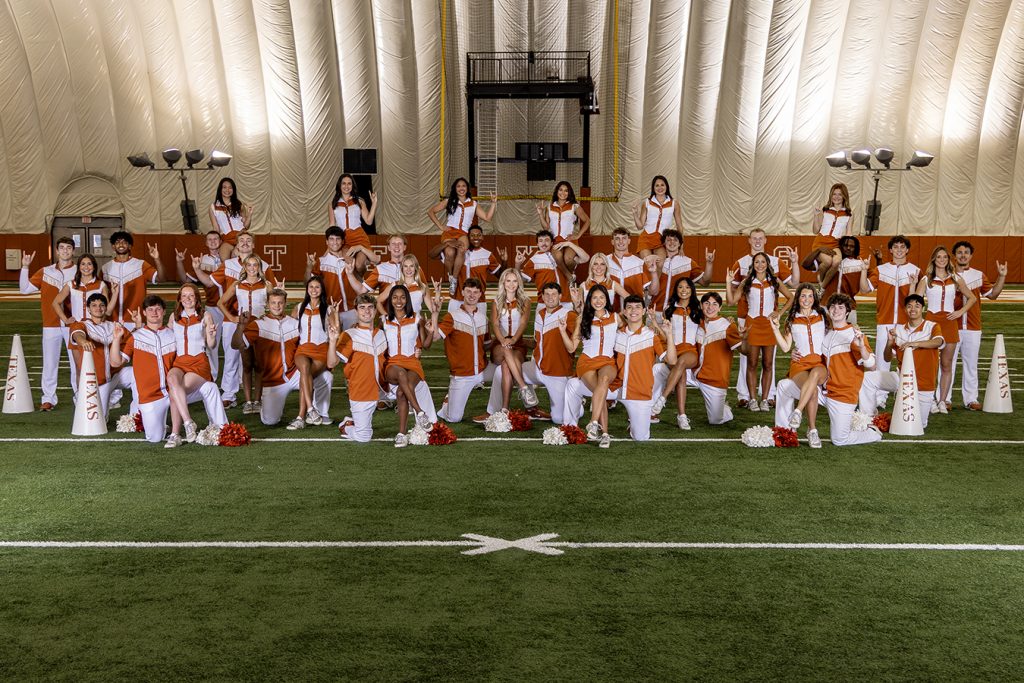
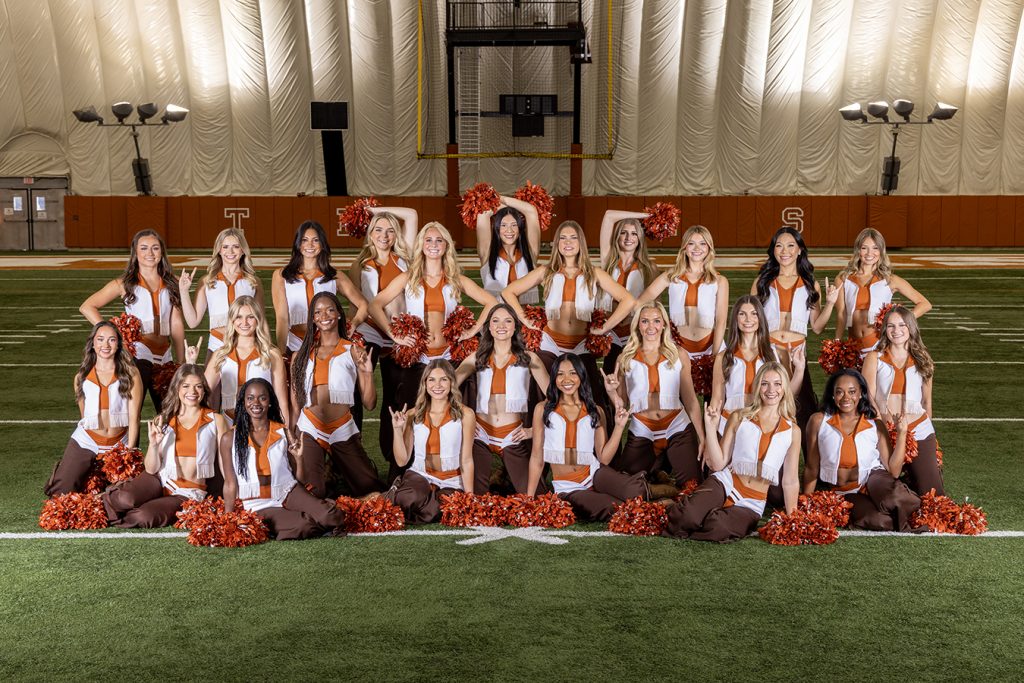
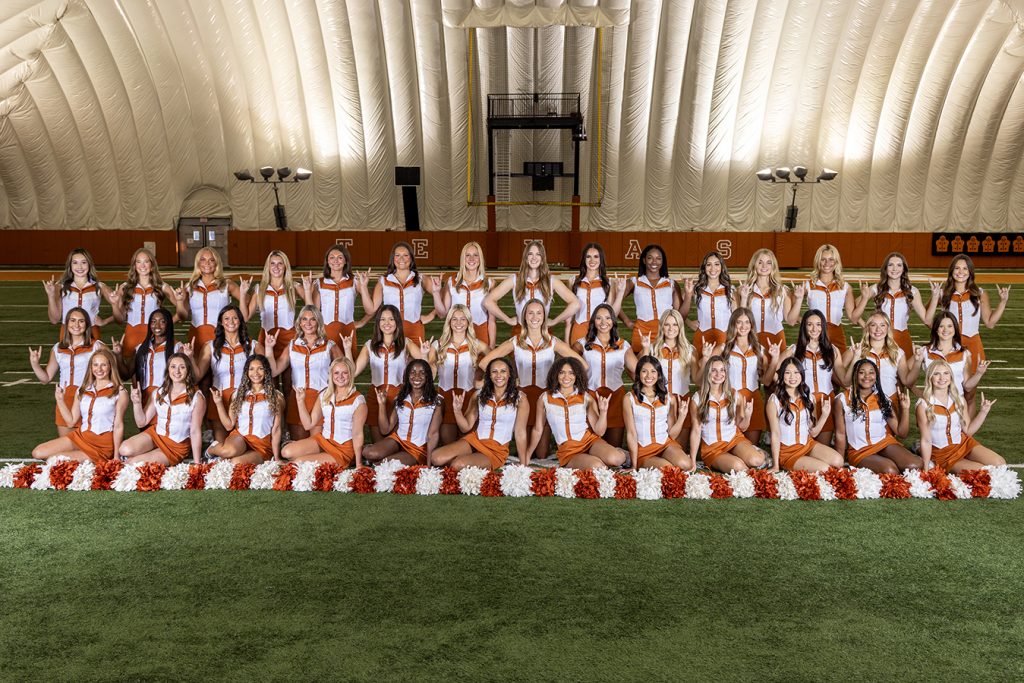
Blair Taylor is the current head coach of the Texas Spirit Program. She is, by all accounts, doing important work not just in coaching her athletes but also in supporting them beyond the field. In spite of her already massive responsibilities, Blair always quickly responded and directed me to more contemporary resources, like photographs and team information, as I was planning the exhibit. She even hand-delivered a current 2026 Orange Team female uniform to be displayed next to Mary Gayle Brindley’s 1961 uniform illustrating the progression of fashion and function in cheer uniforms over time. Blair, thanks so much for seeing the potential of this exhibit, your willingness to help, and for your ongoing support!
CAROLINE DE LA CERDA
Caroline was hired as The Stark Center’s lead archivist in 2024 and has already made a significant impact in our collections and archives. Her work is the important, mostly behind-the-scenes, type of stuff that can easily go unnoticed. But she is making all the difference and continues to lead with great initiative and know-how. Specific to this exhibit, Caroline was wonderful in helping me research and curate different sections of the exhibit and even wrote text panels dedicated to the history of women cheerleaders and their growing involvement during the first part of the 20th century as well as the history of our costumed mascot, Hook ‘Em. Thank you, Caroline, without your help, this exhibit would not have opened in time for the Ohio State game!
JAN, KIM, AND PATTY
Jan Todd, our museum director, continues to lead The Stark Center forward as we seem to be growing and evolving at increasing rates of speed. I am so grateful to her for the opportunity to work as the Center’s curator, for the ongoing opportunities to tell these types of stories in the Stark Center galleries, and for the trust she shows in letting me cook with projects like this one, as well as the public history timelines now on display in the first floor of Bellmont Hall. Kim Beckwith, our associate director, is always going to be my favorite editor. I am so grateful for all the proofreading she has done for me over the last twelve years. I am already thankful for the proofreading and editing she will no doubt be asked to do in the near and ongoing future. And Patty McCain,our curator for Texas Athletics’ archival collections, always jumps in to help and points me toward resources, collections, and other assets that are so valuable in the creation of these new exhibits.
After the experience of writing and designing this exhibit, getting to know Martin and Mary and Karla and Blair, I hope that the exhibit continues to provide me with opportunities to connect with many more of the spirit squad members that I have not yet met. I am anxiously waiting to hear your story, too. I promise. I understand that getting to create this exhibit was a great privilege and the responsibility of it is not lost on me. I’m so proud that this exhibit gives the Texas Spirit program and its wonderful history a chance to finally be heard and celebrated. I know there are still many more stories to be told. My only hope is that what we’ve done at The Stark Center makes my new friends proud.
I can’t help but include here, as a quick conclusion, the best piece of cocktail party trivia I learned in researching the exhibit: the University of Texas didn’t just have a team of yell leaders who wore somewhat silly costumes to differentiate themselves from the crowd––we had them before Texas A&M, and by eight years. In 1899, Rentfro “Rent” Creager was selected as the University’s first official yell leader whereas Aggie lore can only date the first appearance of its yell leaders to 1907 when a group of freshmen found white coveralls in a maintenance closet during a blowout loss. Sounds about right.
The point of all this, as I told a class of history students this morning, is that what it means to be a Longhorn, to be a student of the University of Texas, is now something they will get to carry as part of their identity until the day they die. And this Texas Spirit, this pride, this culture was built and cultivated over time with many major influences from the talented scores of cheerleaders, pom members, and Hook ‘Ems that have come before and given so much. It’s the Texas Spirit that makes this University so great. And it is so crucial that we know how it came to be so that we can protect and preserve it for the next generations of Longhorns to come. Come see the new exhibit for yourself or learn more about it here.
Hook ‘ em!

Leave a Reply