

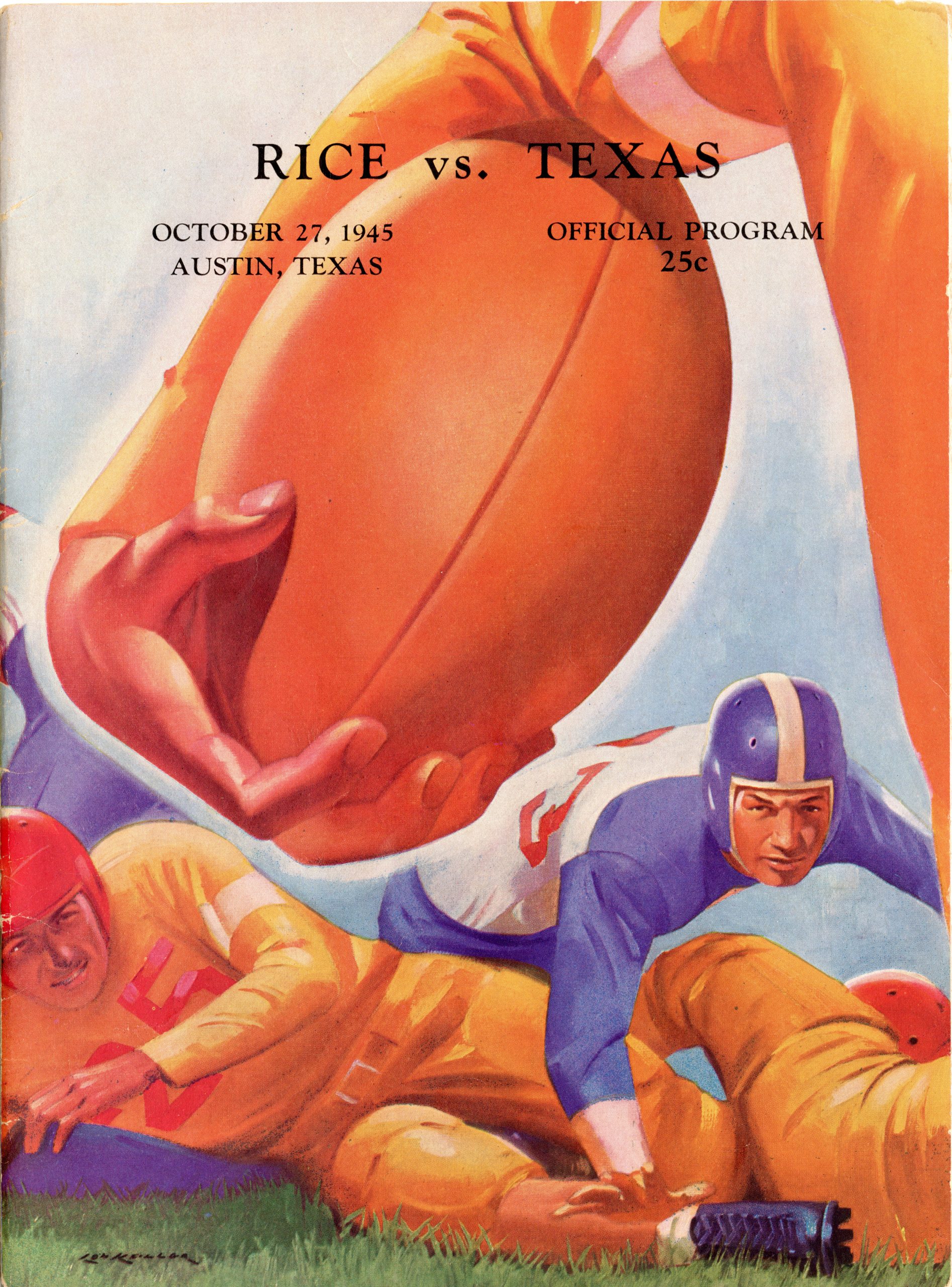
If you attend a Texas Longhorn football game today, you’ll be handed a program that has been mass produced for at least 100,000 fans. Not to knock any of the exceptional photography that has been used in the modern era of college football on the program covers, but they typically use one photo for the entire season and just change out the guts of the program to include the visiting team’s lineup and college information. Gameday programs were not always this standardized. In fact, they were once vibrant works of art. Few cover artists shaped that era more profoundly than Lon Keller.
When contests began in college football in the second half of the nineteenth century, there was no need for a game program. The fan base was small and most of the players could be easily identified by sight. As such, players didn’t have numbers on their “jerseys” because the game was still quite intimate. As football evolved from the open rugby style into the increasingly complex game it became by the 1890s, fans needed ways to follow the action. Organizers began printing simple scorecards listing players’ names so spectators could track scoring and player performance. These scorecards eventually evolved into full game programs.
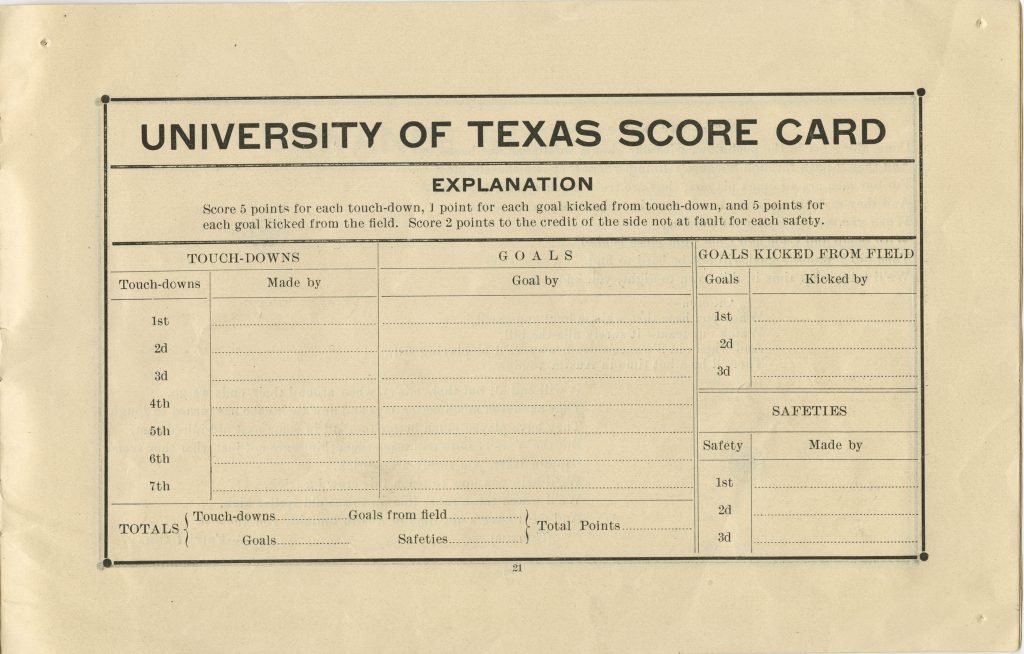
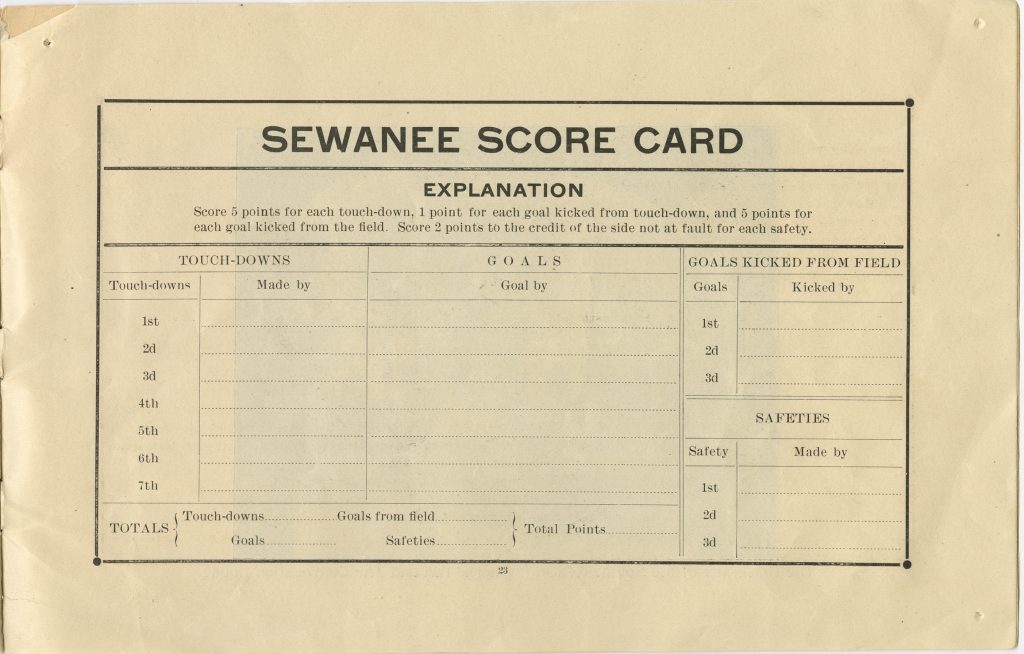
By the early twentieth century, only the most successful football programs could afford to begin experimenting with more elaborate designs, including color covers. The University of Texas was one of these programs. Around 1920, UT introduced higher quality, boldly designed, colorful football programs at games.
In 1938, University of Texas football programs took on a new life when artist Lon Keller began designing their covers. Keller would go on to produce artwork that captured not only the excitement of college football but also the cultural mood of mid-twentieth-century America.
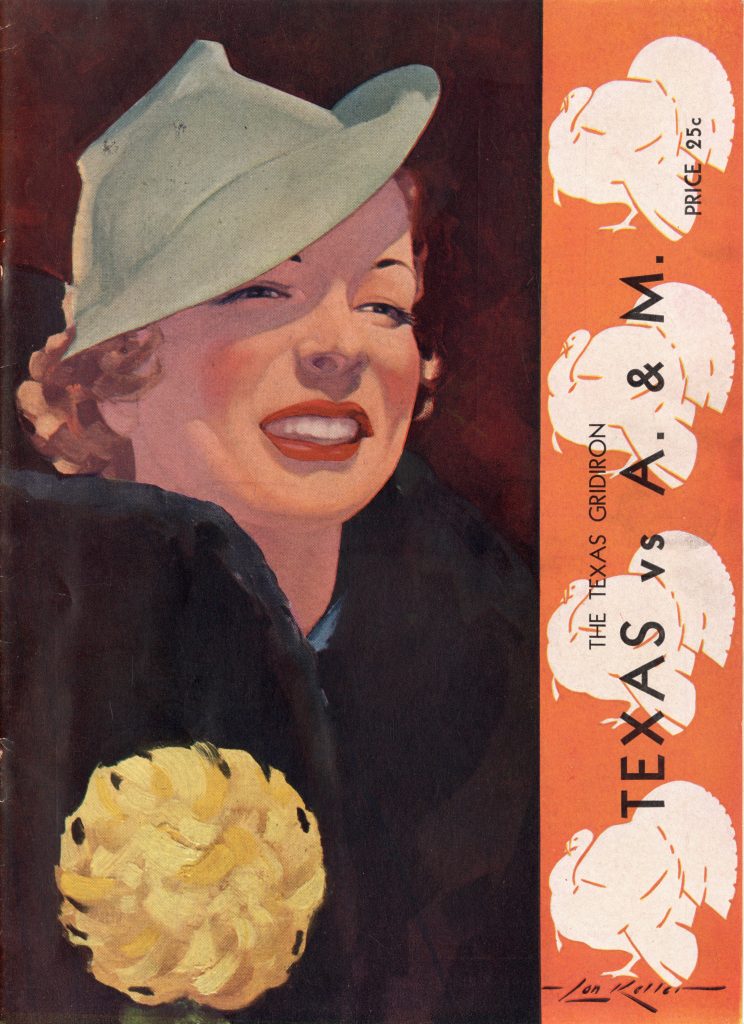
Born Henry Alonzo Keller in Lititz, Pennsylvania in 1907, Keller displayed artistic talent early. He graduated cum laude from Syracuse University in 1929 with a degree in fine arts. Unfortunately, his graduation coincided with the Great Depression, making it extremely difficult to establish a career in commercial art.
Keller accepted a position managing the School of Architecture store at the University of Pennsylvania, supplementing his income with freelance illustration work for newspapers and magazines. His breakthrough came in 1932 when the editor of Penn’s football programs noticed Keller’s commercial artwork and commissioned him to design the cover for the Penn-Cornell Thanksgiving Day game. The program featured a female football spectator, a theme that would later become one of Keller’s artistic signatures.
Keller’s Penn-Cornell cover caught the attention of a salesman from Lederer, Street & Zeus (LS&Z), a California-based printing firm specializing in four-color program covers. In 1933, Keller began illustrating covers for the company, launching his national career.
While working with LS&Z, Keller met Don Spencer, a visionary entrepreneur who would transform the sports program industry. Spencer developed a new production model that allowed high-quality covers to be printed in bulk with blank spaces for local teams to add game-specific information later. This approach dramatically reduced costs while maintaining artistic quality, allowing even smaller colleges to afford professionally illustrated programs. Spencer’s business model became enormously successful, capturing nearly 95 percent of the college football and basketball program market. Keller’s artwork soon appeared in stadiums across the country, earning him the nickname “The Norman Rockwell of College Football.”
Keller’s success came during a period when color photography was expensive and difficult to reproduce in print, allowing illustration to dominate sports media. The artwork on his football program covers helped capture the essence of the culture of the era by featuring animated spectators, mostly pretty, young women, amid action scenes. During World War II, many of the covers conveyed patriotic themes typical of the era.
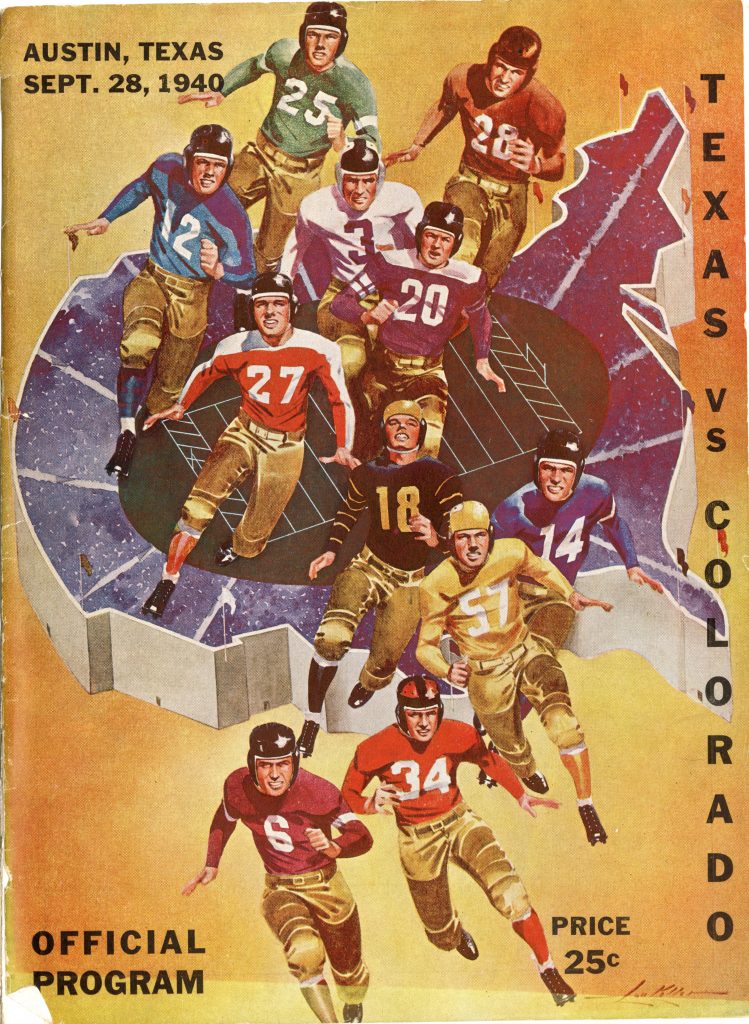 1940 UT vs. Colorado (Lon Keller)
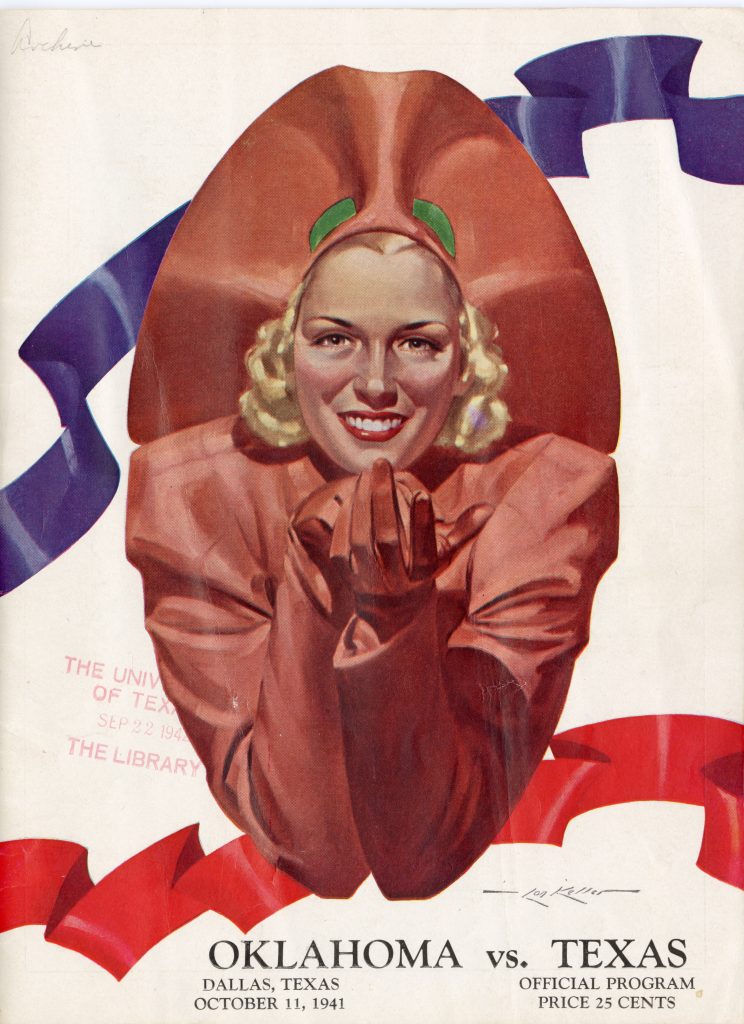 1941 UT vs. OU (Lon Keller)
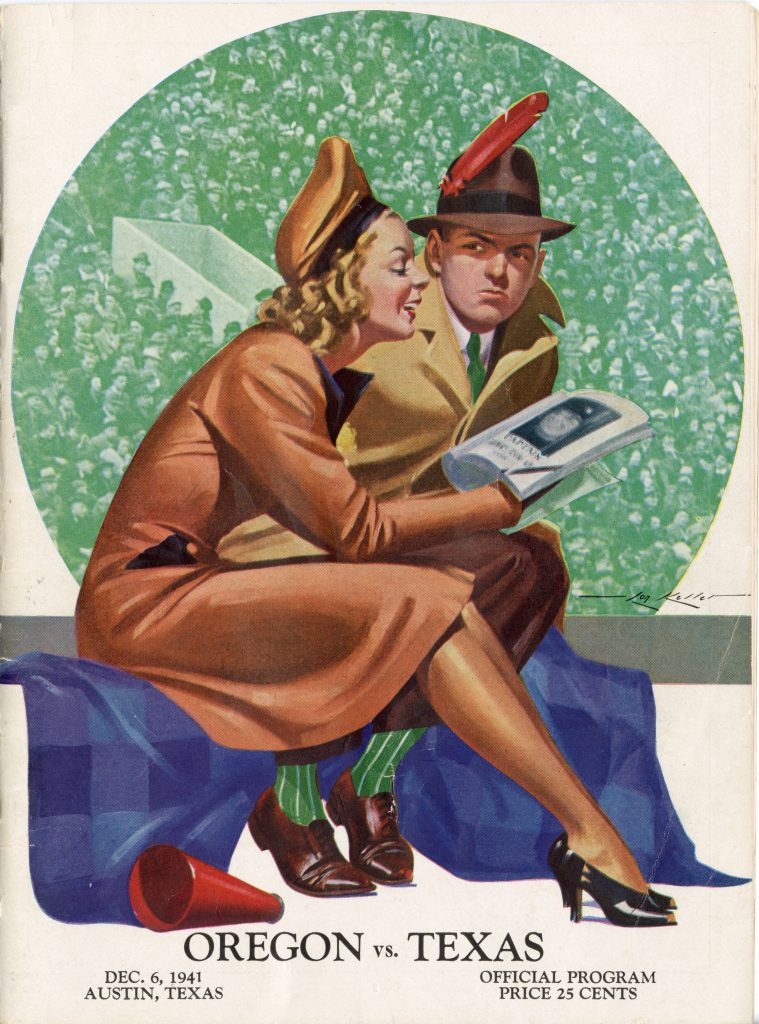 1941 UT vs. Oregon (Lon Keller)
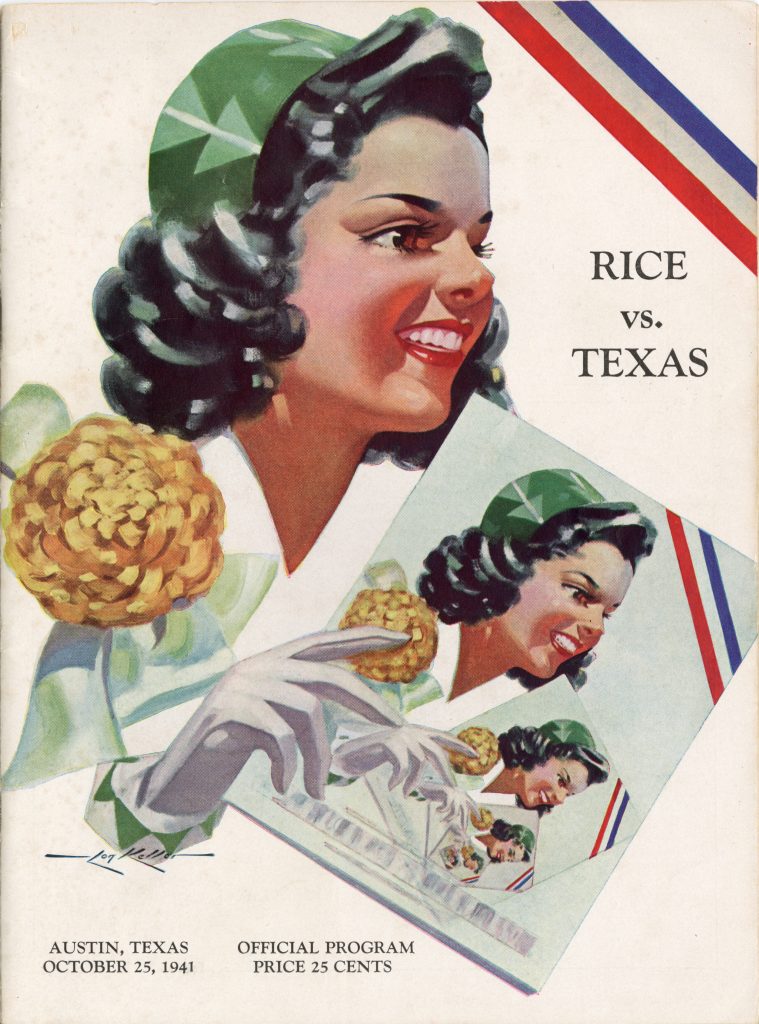 1941 UT vs. Rice (Lon Keller)
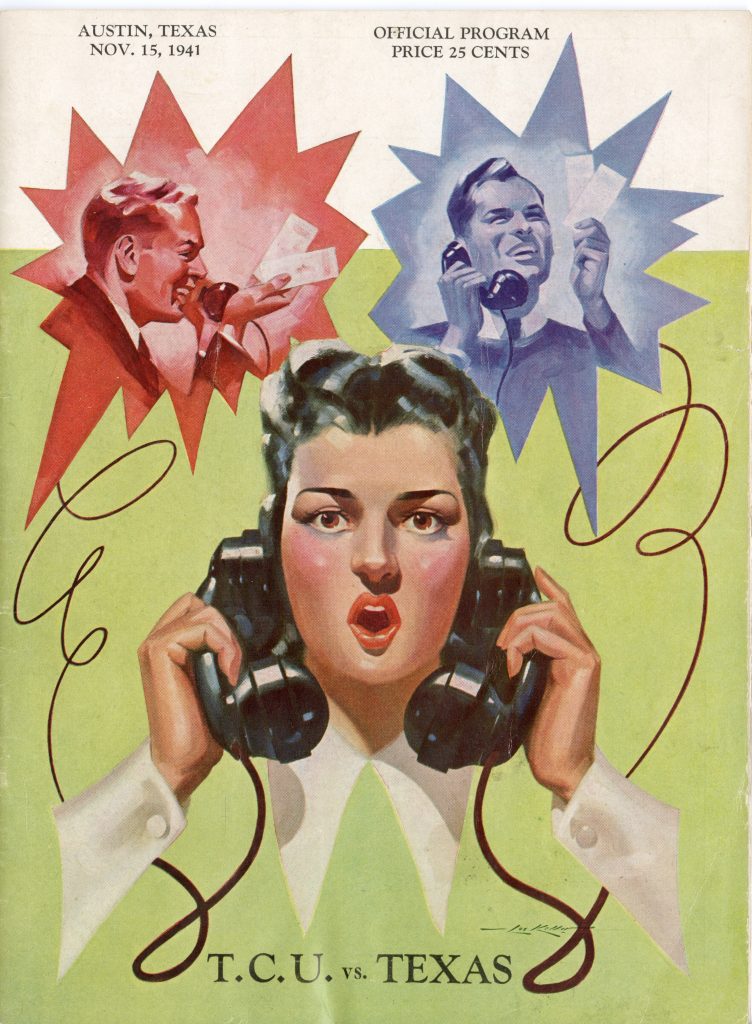 1941 UT vs. TCU (Lon Keller)
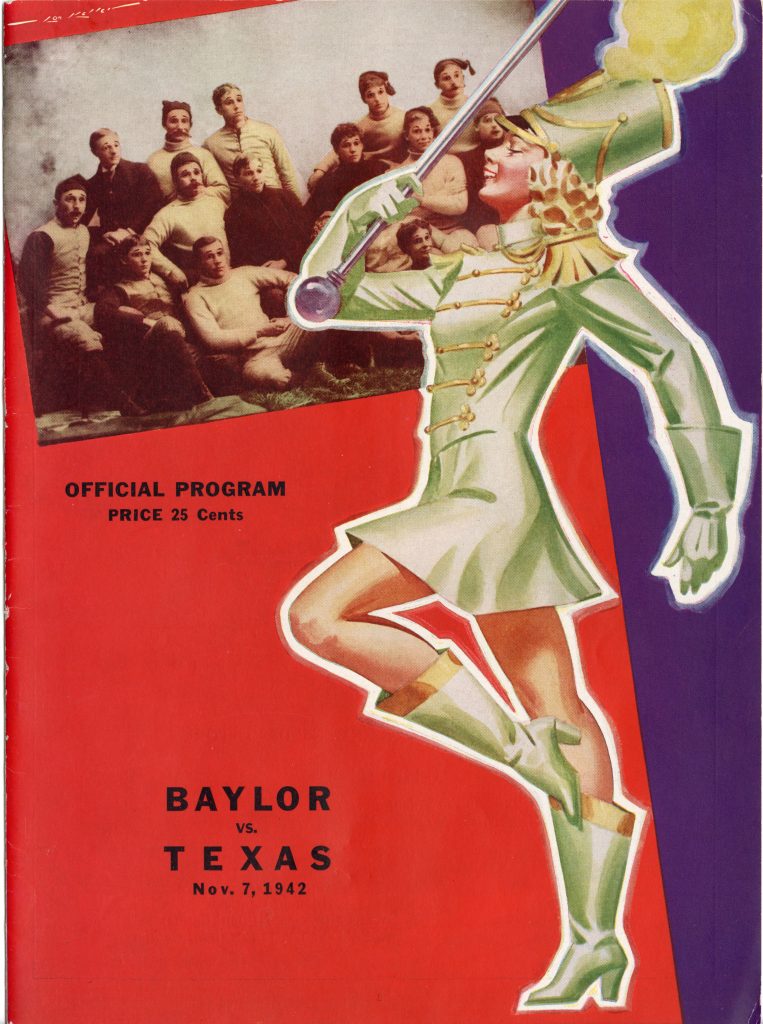 1942 UT vs. Baylor (Lon Keller)
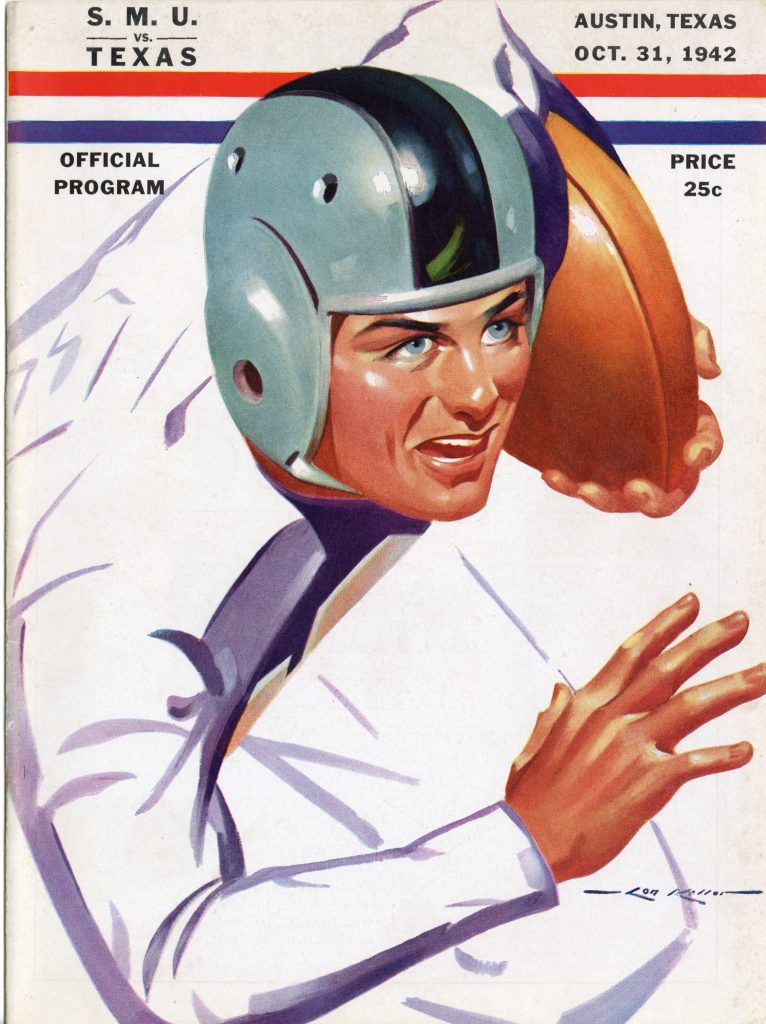 1942 UT vs. SMU (Lon Keller)
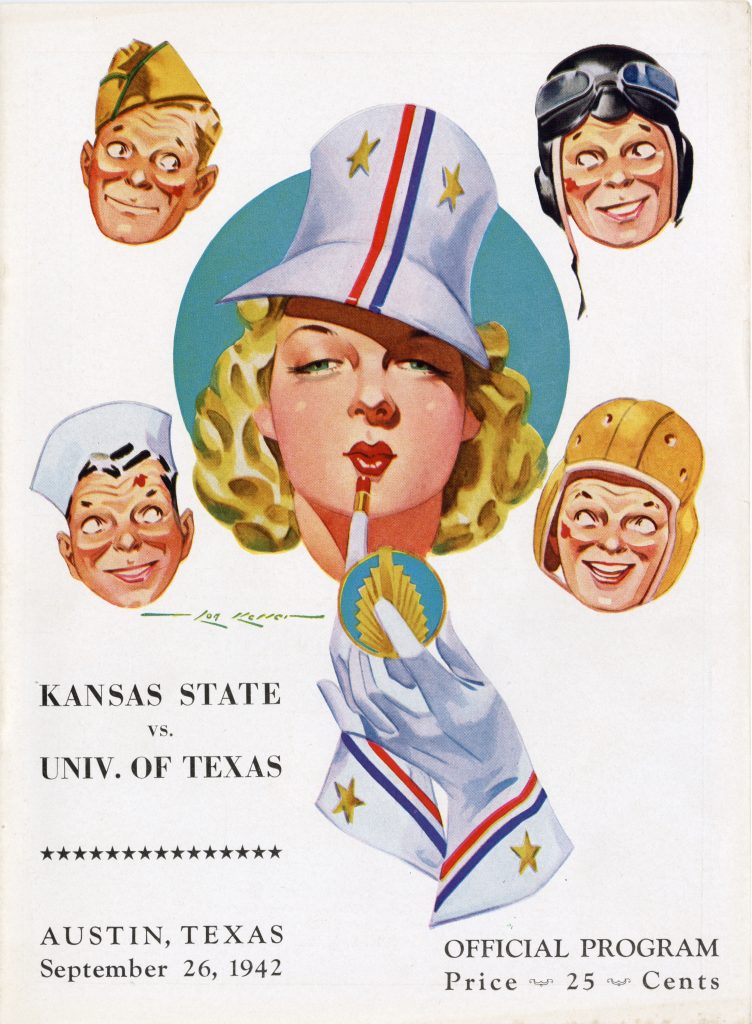 1942 UT vs. Kansas State (Lon Keller)
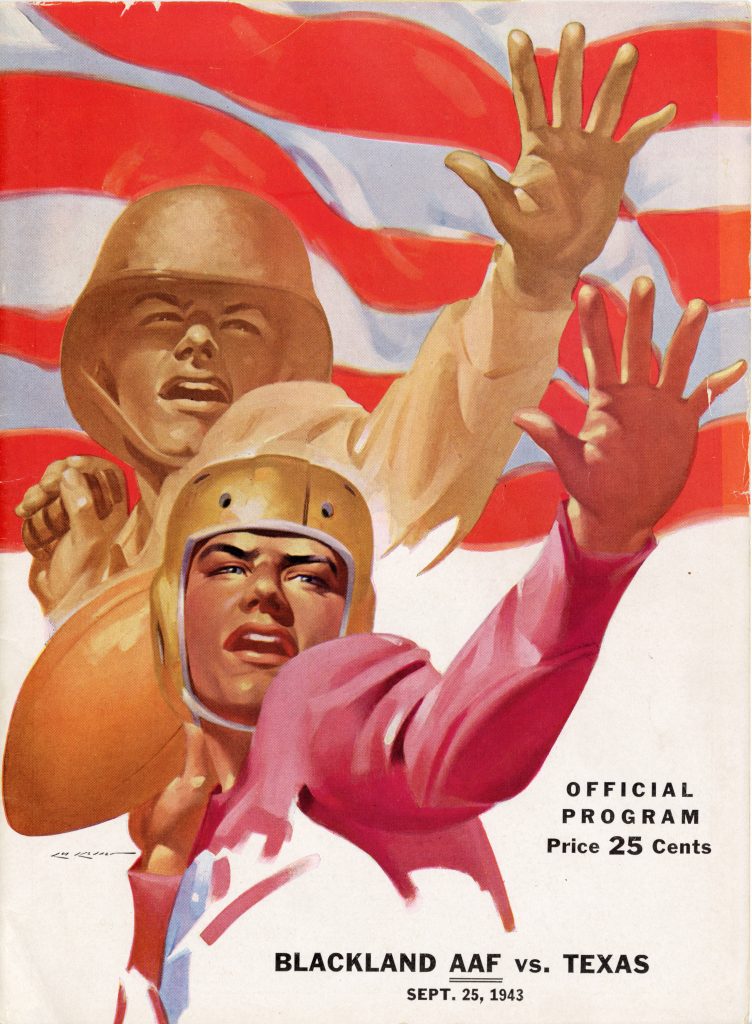 1943 UT vs. Blackland AAF (Lon Keller)
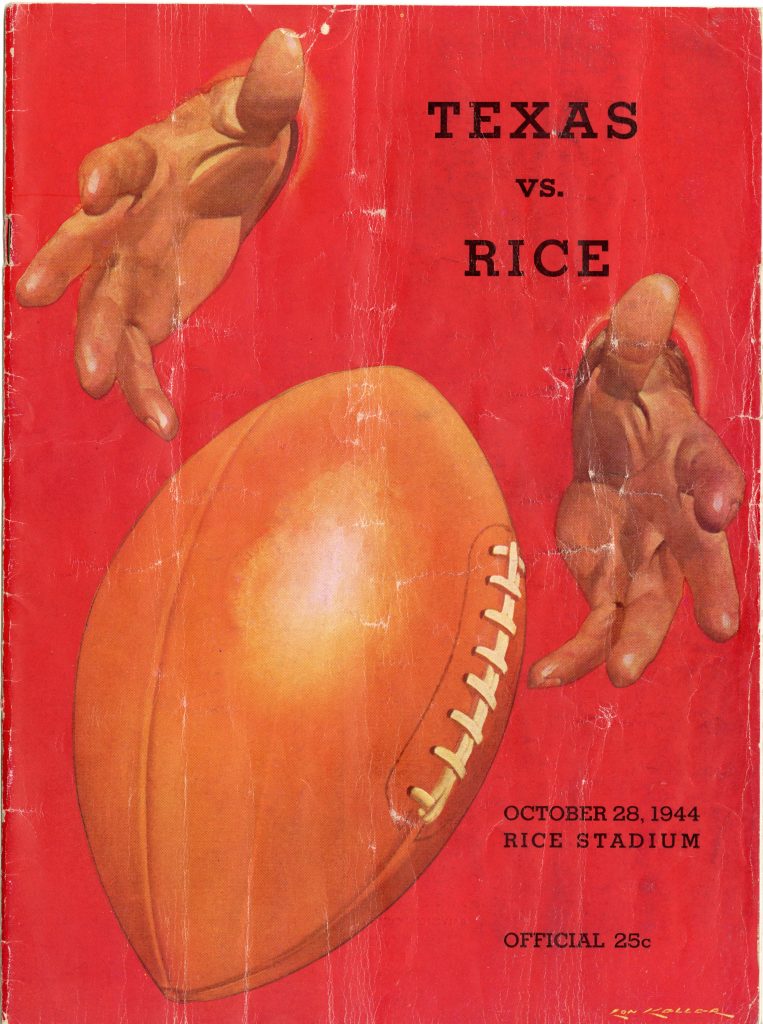 1944 UT vs. Rice (Lon Keller)
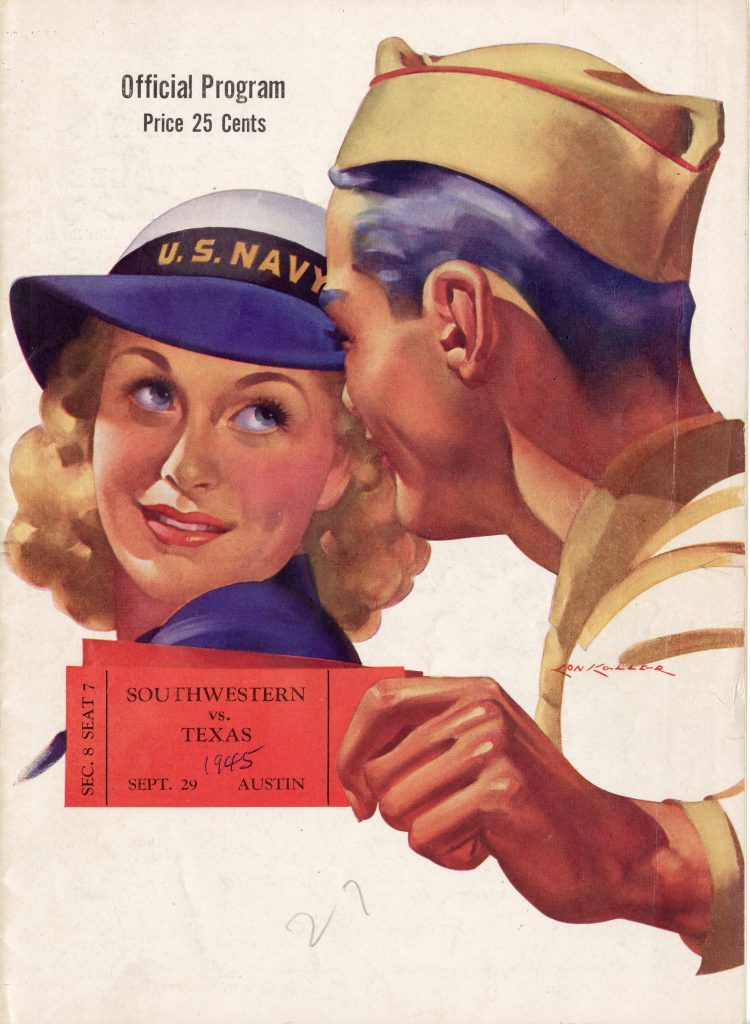 1945 UT vs. Southwestern (Lon Keller)
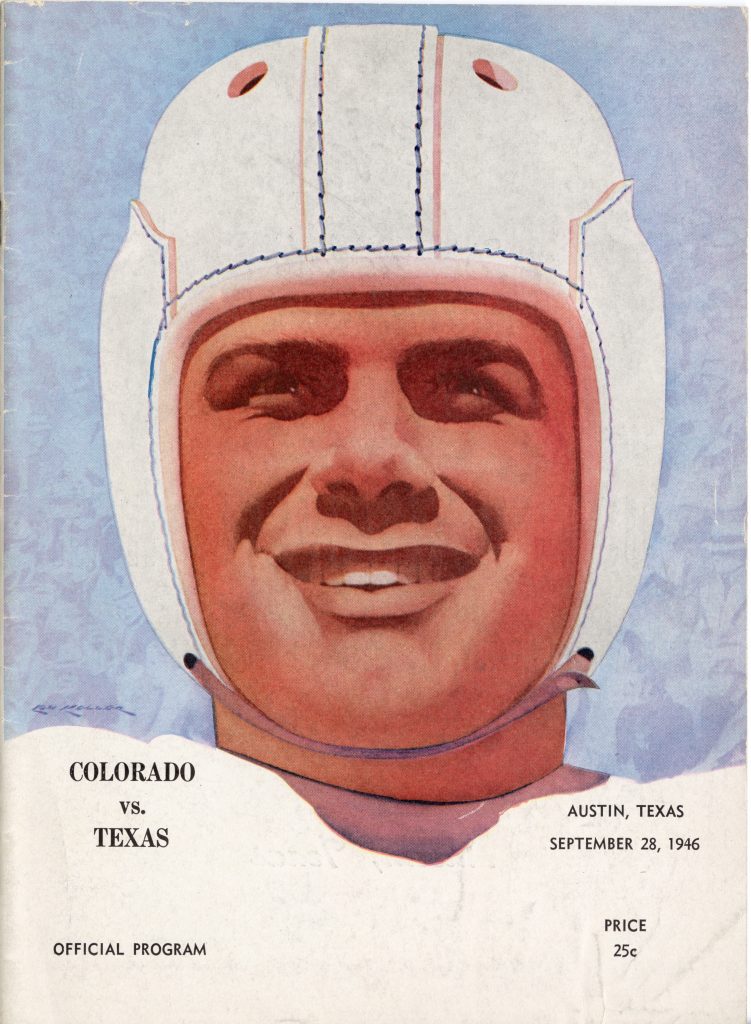 1946 UT vs. Colorado (Lon Keller)
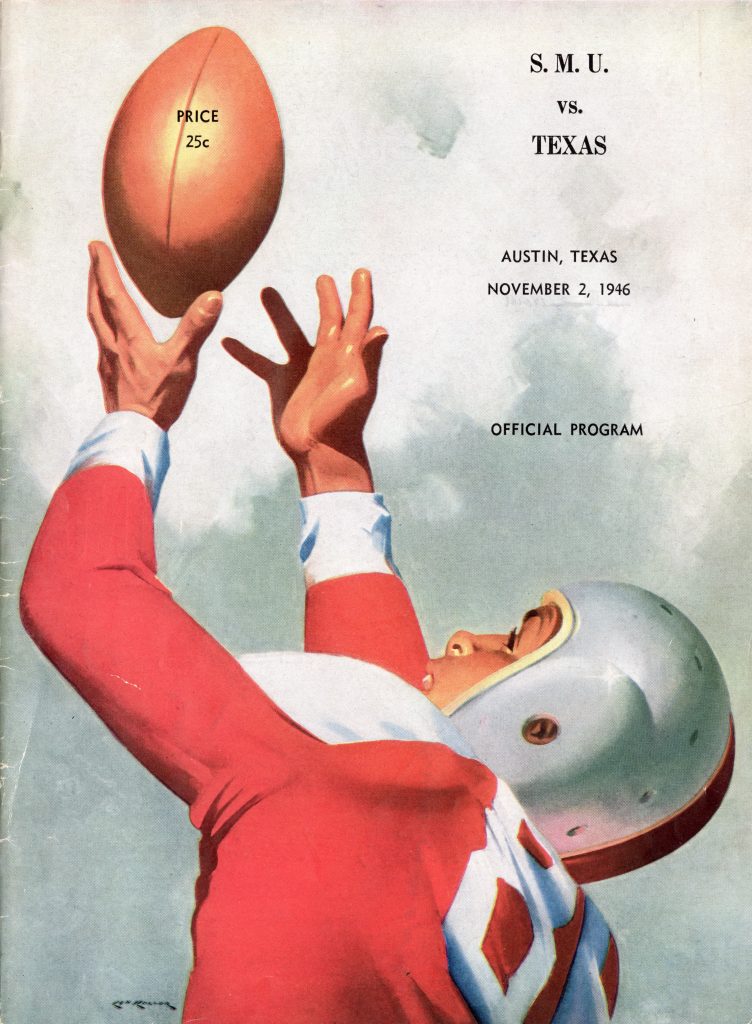 1946 UT vs. SMU (Lon Keller)
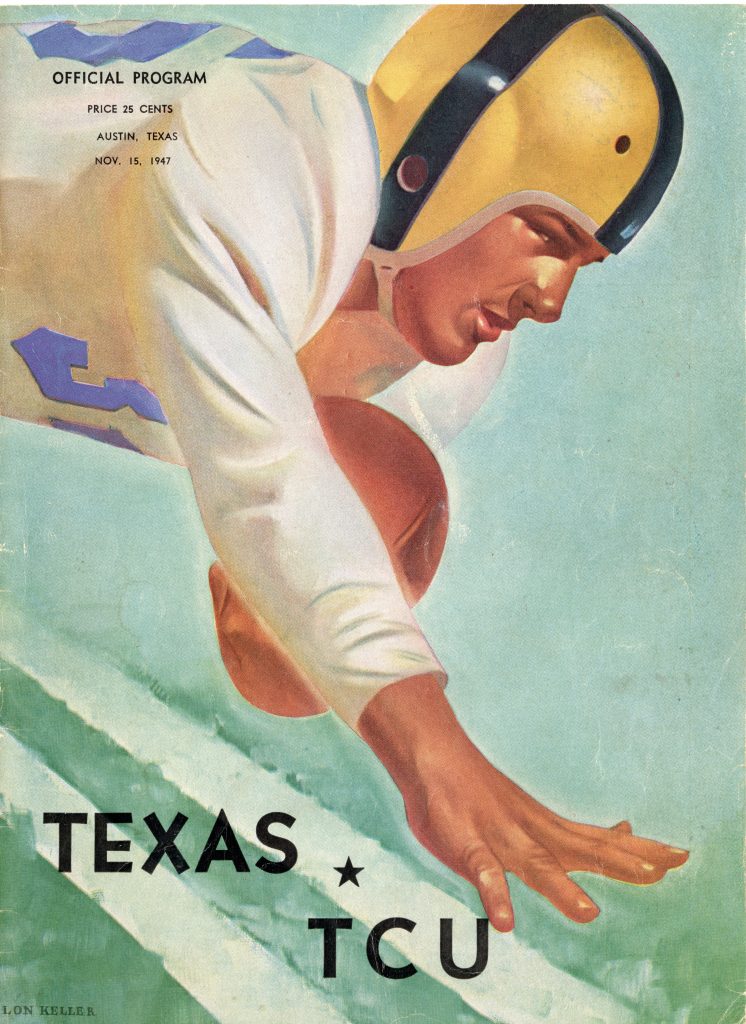 1947 UT vs. TCU (Lon Keller)
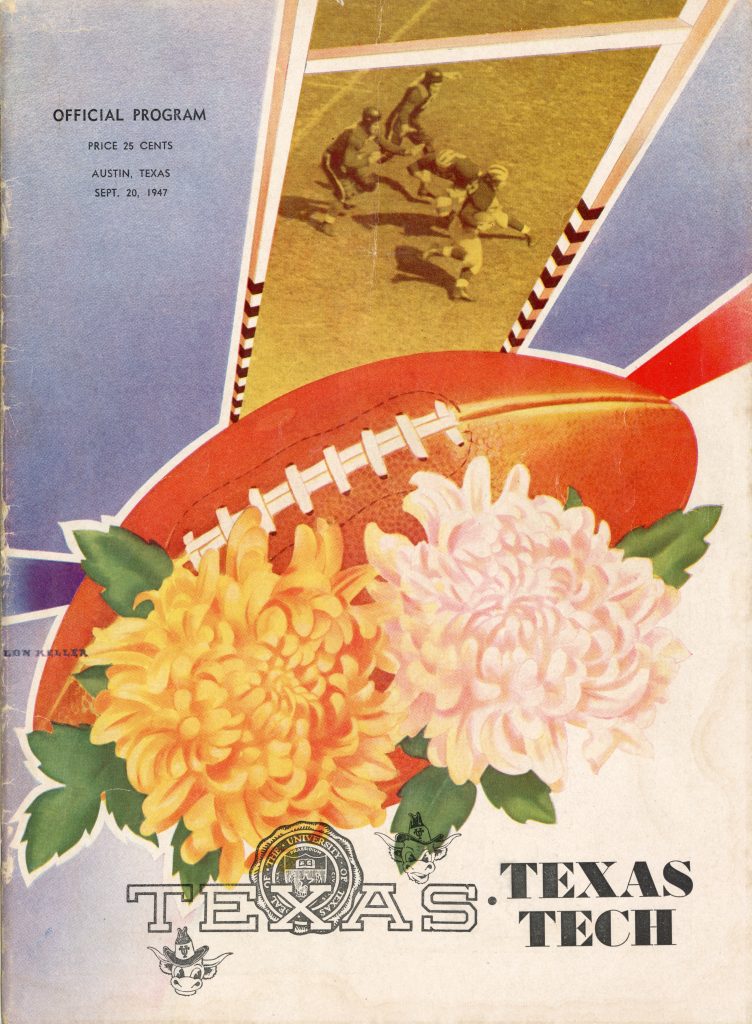 1947 UT vs. Texas Tech (Lon Keller)
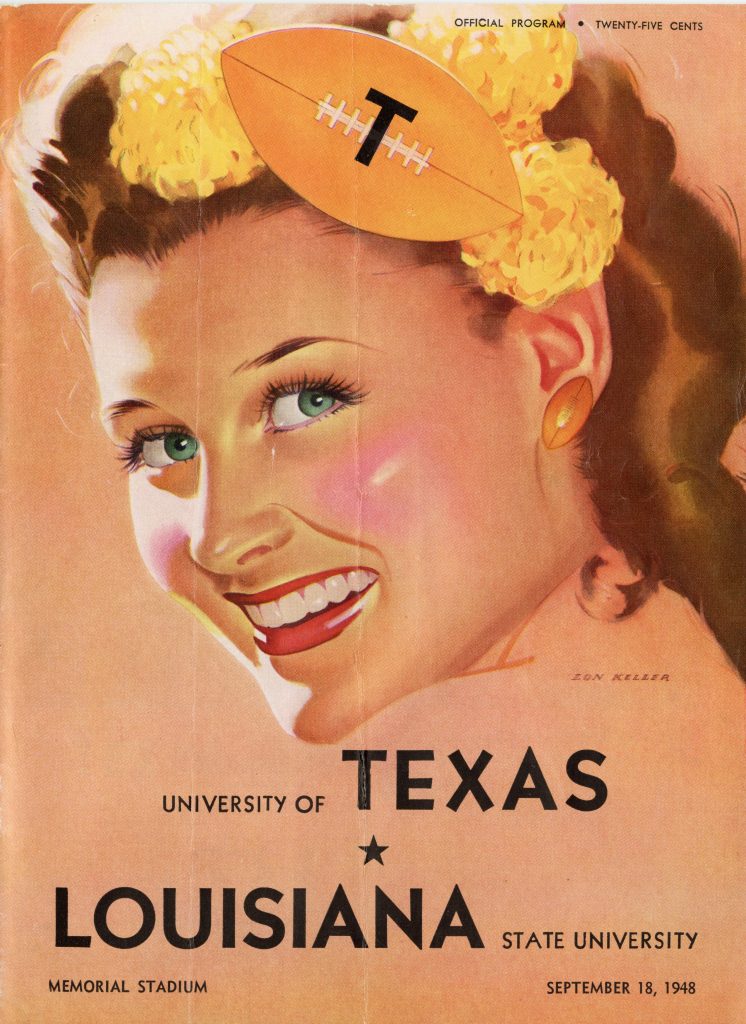 1947 UT vs. Louisiana (Lon Keller)
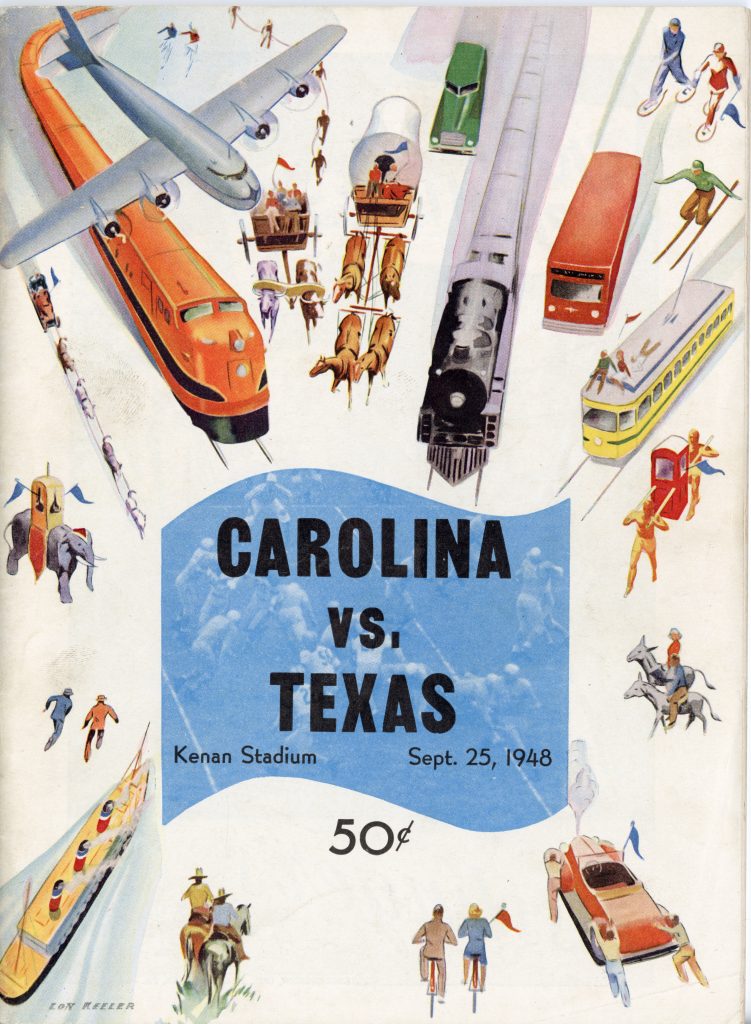 1948 UT vs. UNC (Lon Keller)
Keller’s artwork reached an enormous audience through his use of Spencer’s syndication model, distributing millions of programs across the country by the 1940s. Spencer’s collaboration with Coca-Cola expanded this reach even further, supplying football programs to thousands of high schools nationwide. Over his career, Keller produced more than 250 college football program covers, averaging roughly fifteen new designs each year, many originally painted in oil on large canvases.
Over four decades, Lon Keller created at least 1,000 sports program covers. His work shaped not only the visual identity of football but also how fans emotionally connected with the sport during what many consider the Golden Era of American athletics. For generations of fans, Keller’s illustrations transformed simple game programs into cherished souvenirs. Today, his artwork remains a lasting reminder of a time when sports, art, and culture intersected in ways that defined the visual storytelling of American athletics.
If you enjoyed this blog and are hungry for more on UT Football programs, click here to experience the Longhorn Legacy online exhibit of over 100 game programs that include not only Lon Keller’s work, but the work of several other artists over the years.

Leave a Reply